Prototypes
Eight small features built on 26 September 2026 to show what could help archivists get started with Clio-X. Each is on its own branch of the fork and has not been merged. They are here to be chosen from, not as finished work.
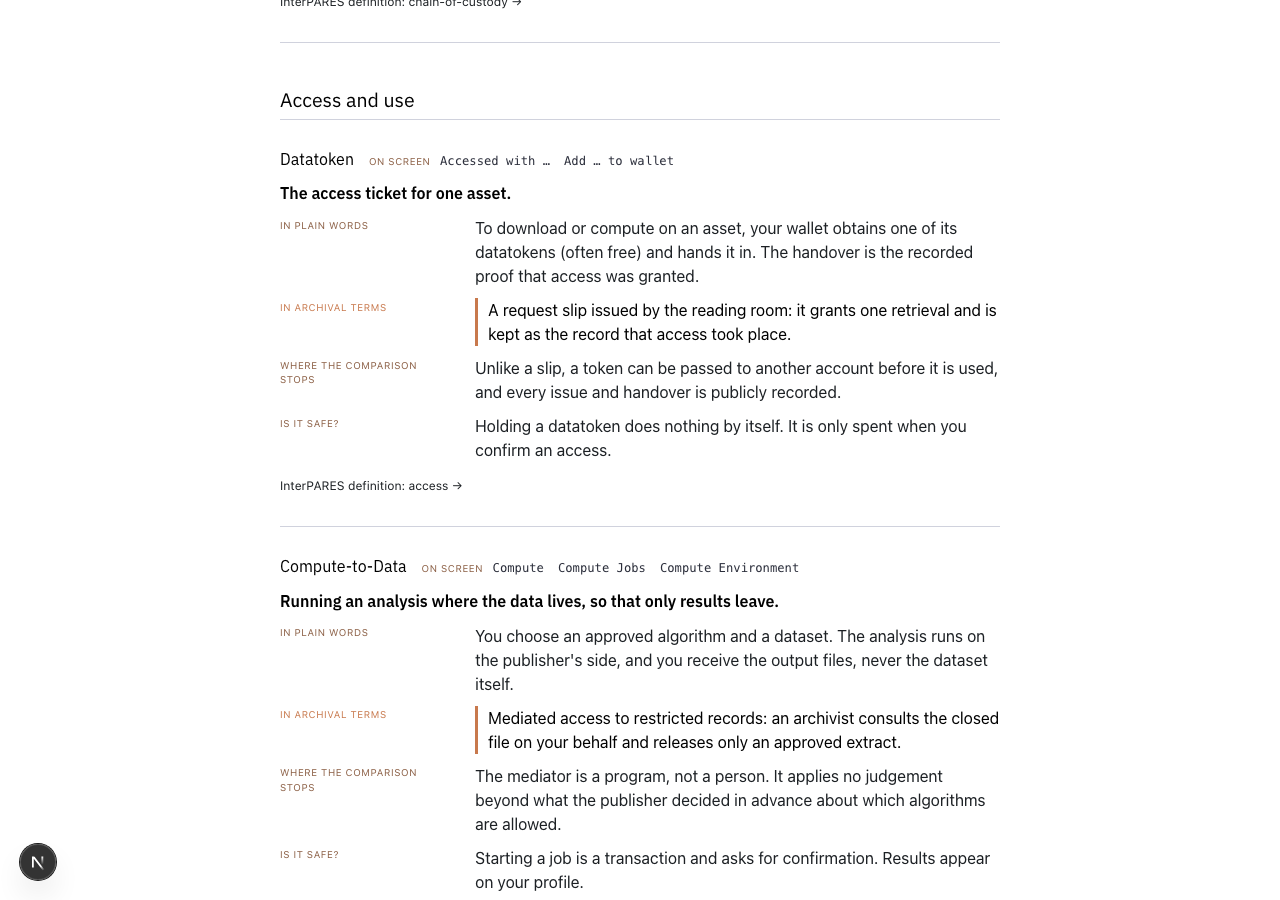
(a) Archival-terms glossary
Technical words on Clio-X screens get a dotted underline or a “?” that explains them in archival terms, with a full page of 13 terms linked to the InterPARES Trust AI terminology.
Open point: InterPARES has “definition not yet developed” for wallet, transaction and smart contract — a possible contribution.
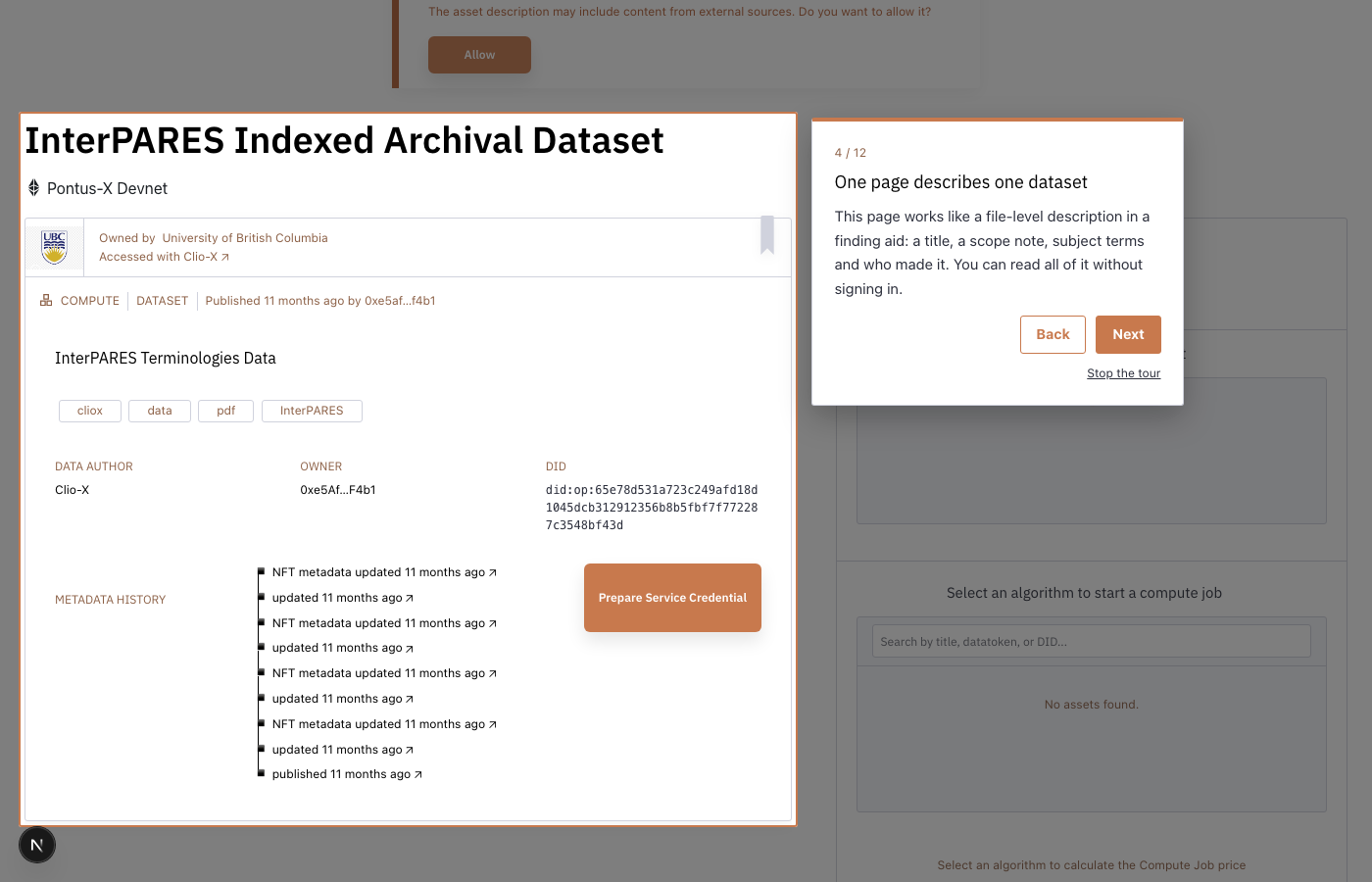
(b) First-run guided tour
A 12-step, about 5-minute tour through one whole task, with the page dimmed and clicks paused so nothing can happen by accident.
(c) A first look (98 s video)
A silent video with English captions that walks through one dataset page, framing each thing the caption talks about.
Open point: The captions' analogies (catalogue entry, reference code, audit trail) need an archivist's check.
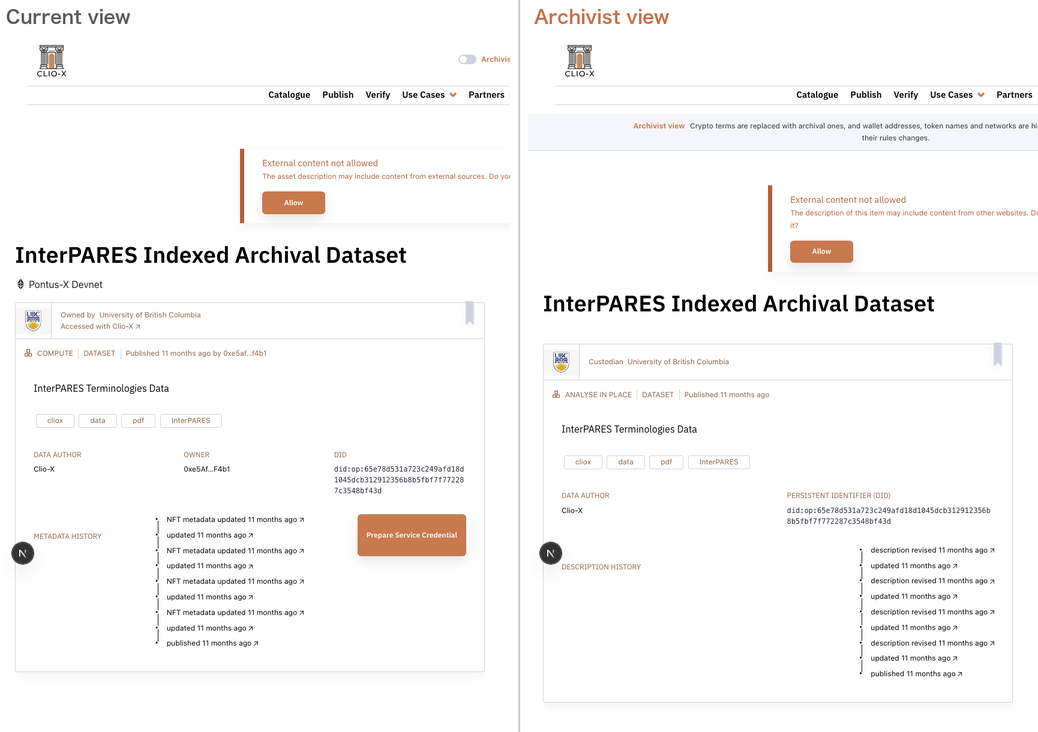
(d) Archivist view
A header switch that shows the same site in archival terms (custodian, persistent identifier, “analyse in place”) and hides wallet addresses, token and network names.
Open point: The home page says “Web3” five times — Clio-X's own message, left as is.
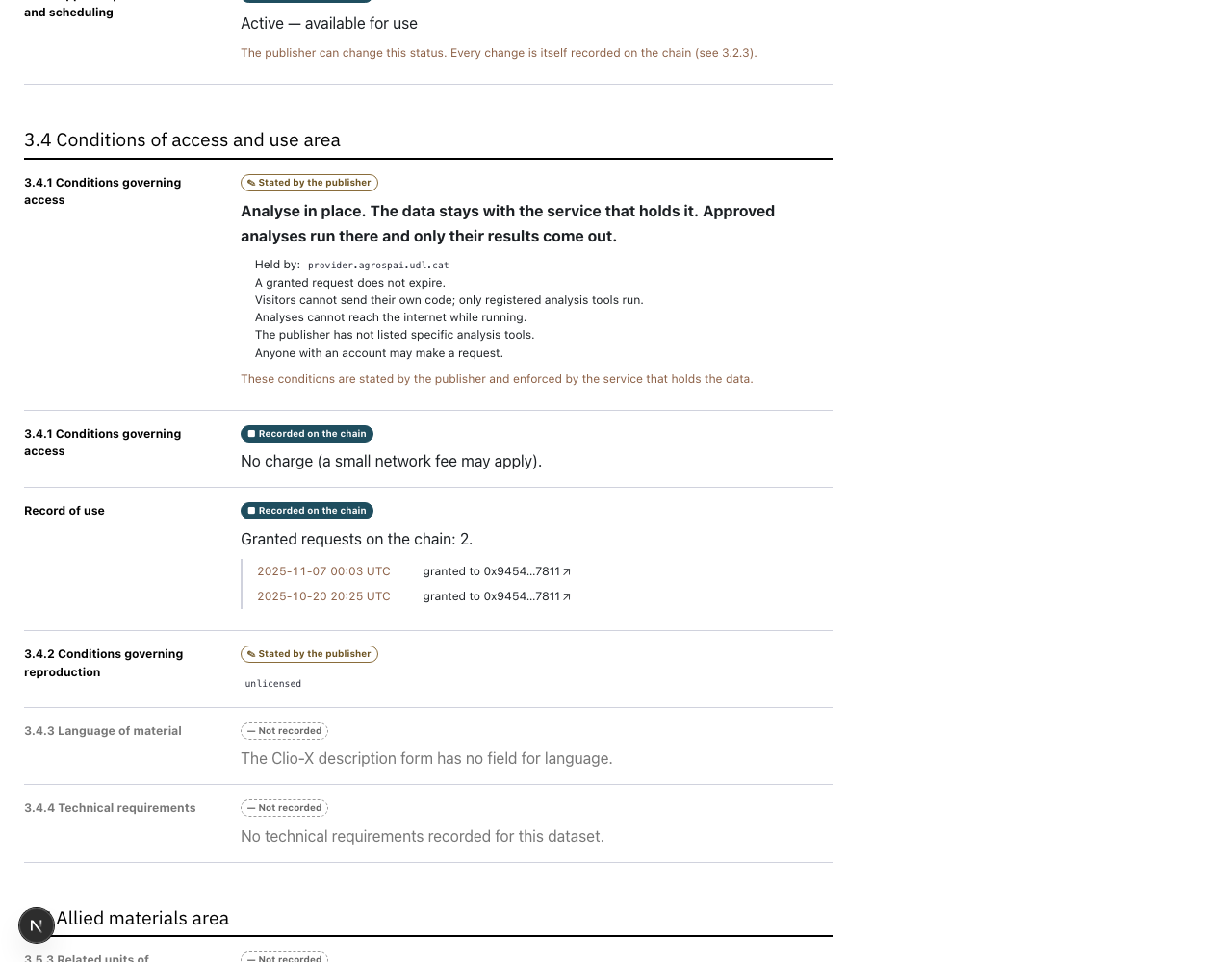
(e) Provenance as a finding aid
Each dataset gets a page laid out in the ISAD(G) areas, with every value marked “recorded on the chain”, “stated by the publisher” or “not recorded”.
Open point: Example: the InterPARES dataset states it was updated 2025-10-17, but the chain shows 4 edits on 2025-10-20. Japanese ISAD(G) element names need checking against the published translation.
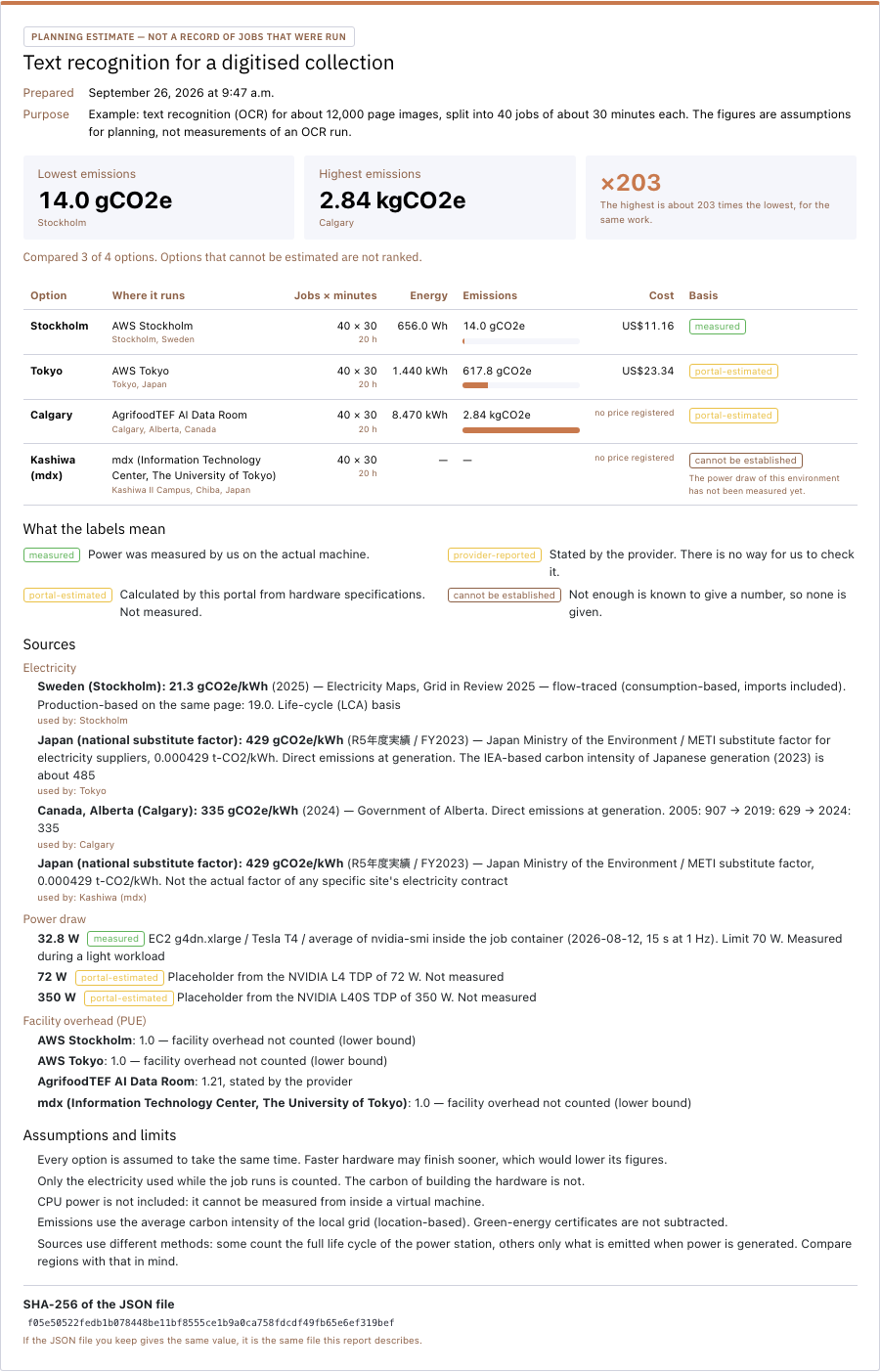
(f) Carbon and cost report
Estimate an analysis's energy, CO2 and cost for several places before running it, and keep the estimate as a report (PDF, CSV, JSON) with a SHA-256.
Open point: Same OCR workload: Stockholm 14.0 g vs Calgary 2.84 kg CO2e (≈203×). The figures assume the same run time on different machines.
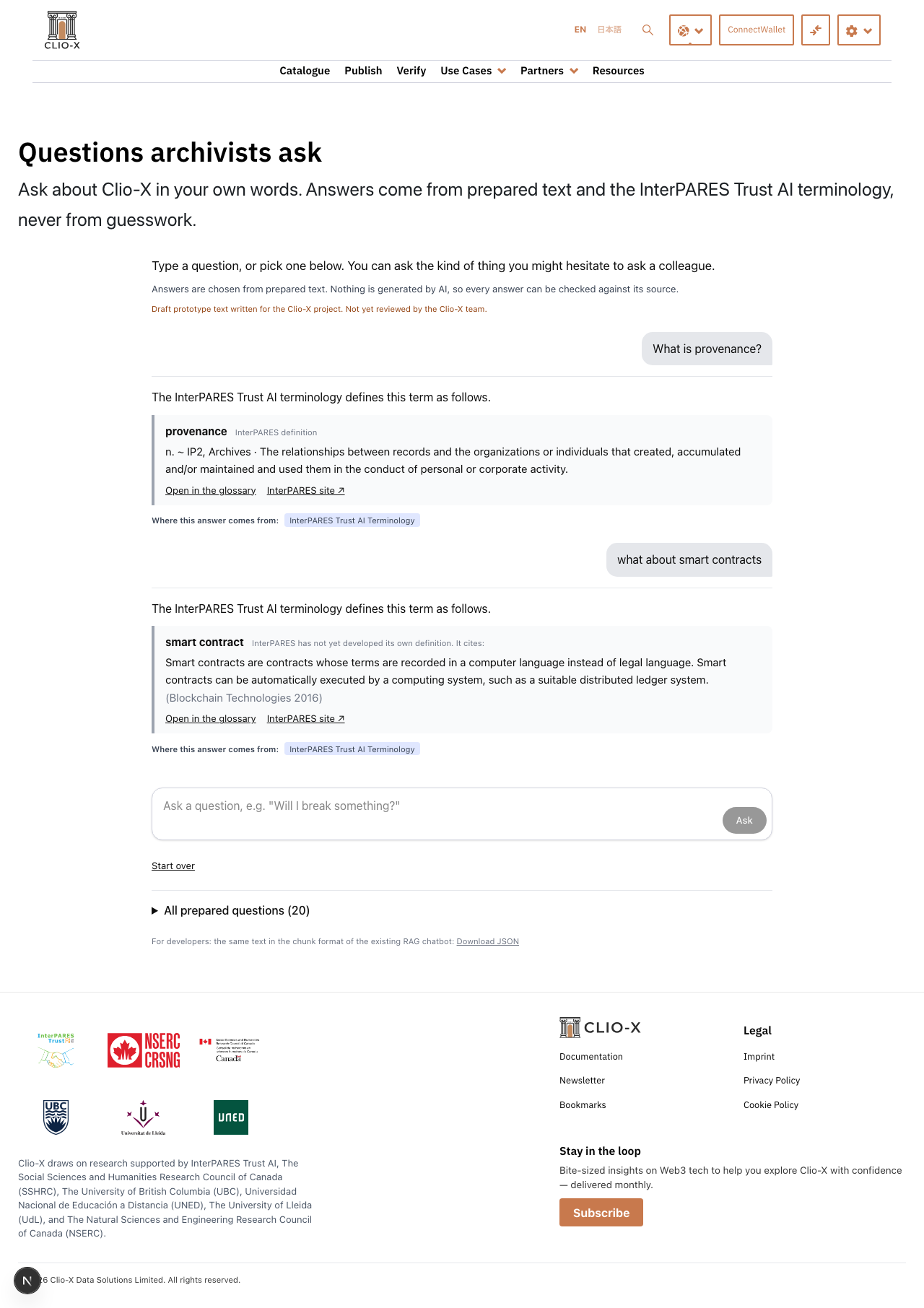
(g) Archivist Q&A
Archivists ask in their own words and get one of 20 prepared answers with its source shown. Nothing is generated, so nothing can be made up.
Open point: The 20 answers are drafts by Claude and need review by the Clio-X team.
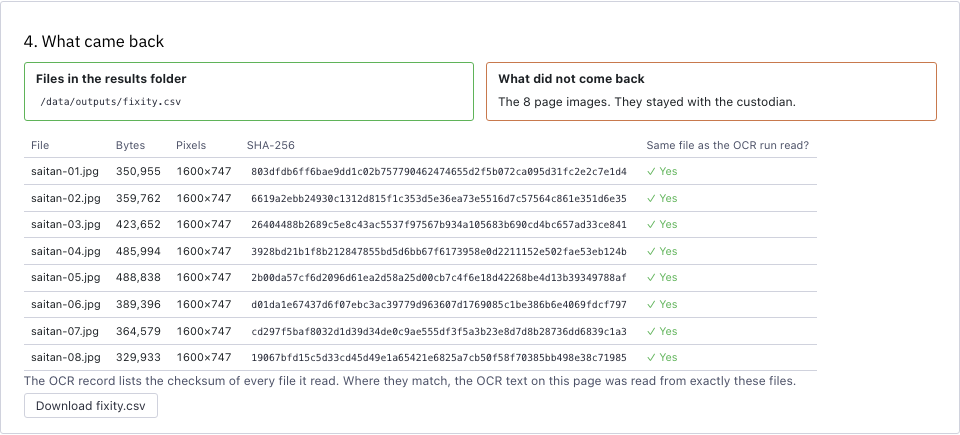
(h) Sample collection to try an analysis
Eight public-domain page images from the National Diet Library: check their fixity in the browser and follow one real OCR run, including the page where it fails.
Open point: Next step could be to publish the same images and OCR as a compute asset on the trial node.